
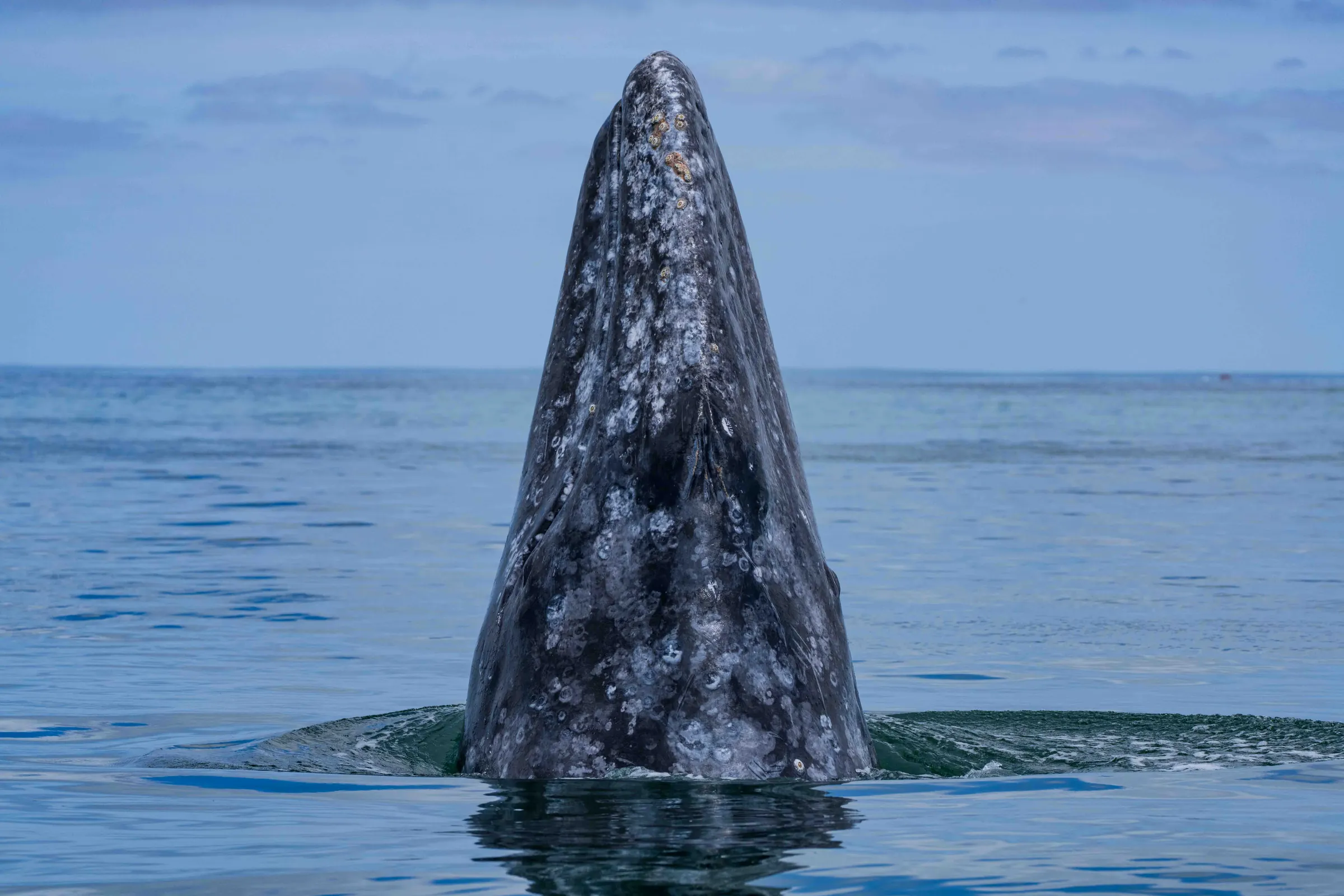
Baja California Sur, Mexico
Gray, blue, fin, Bryde's and humpback whales · December – April
Species in this destination


These are the species seen most often. Other whales also appear in this destination, less regularly.
When to go
Sighting probability
The longer the bar, the likelier you are to see whales that month. The dark bar marks the peak of the season.
In short: the season runs from December to April and February is the best month, when gray whales fill the Pacific lagoons and blue whales gather in the Sea of Cortez.
Baja California Sur brings together, in a single region, two of the best whale-watching settings in the world: the Pacific lagoons where gray whales are born, and the Sea of Cortez, with one of the largest concentrations of blue whales on the planet.
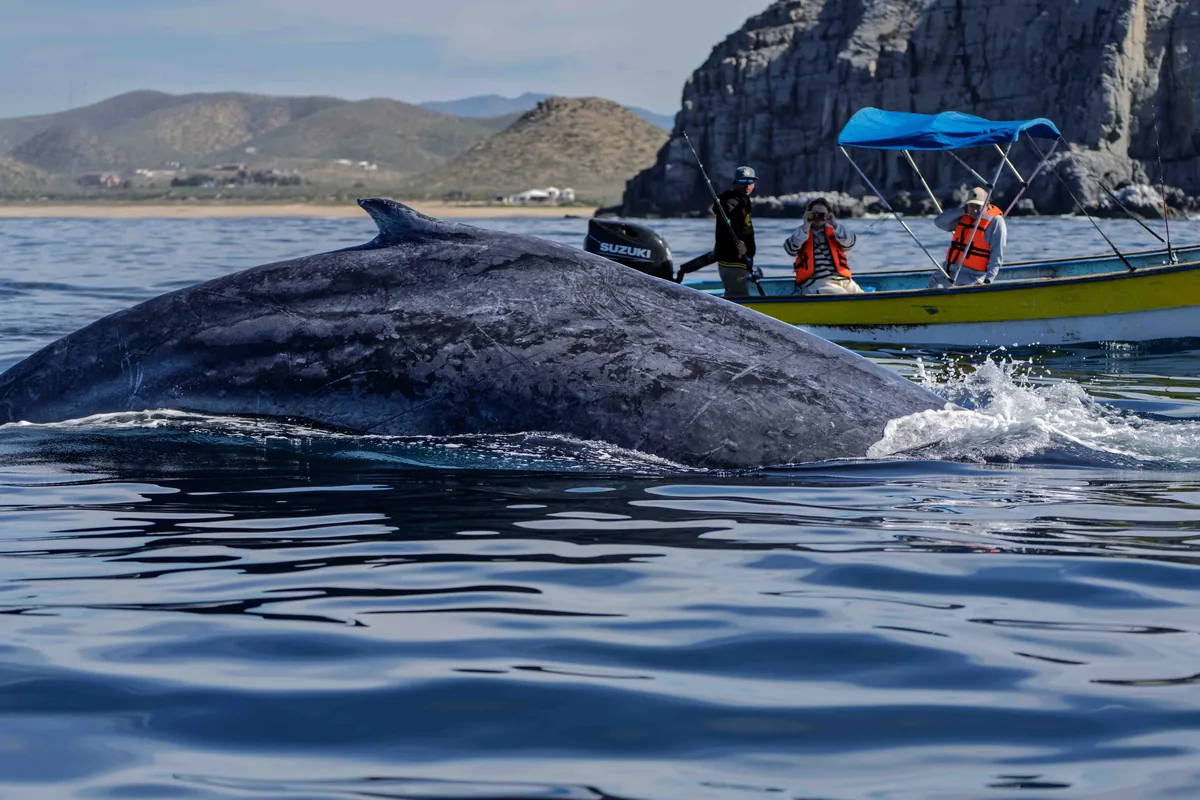
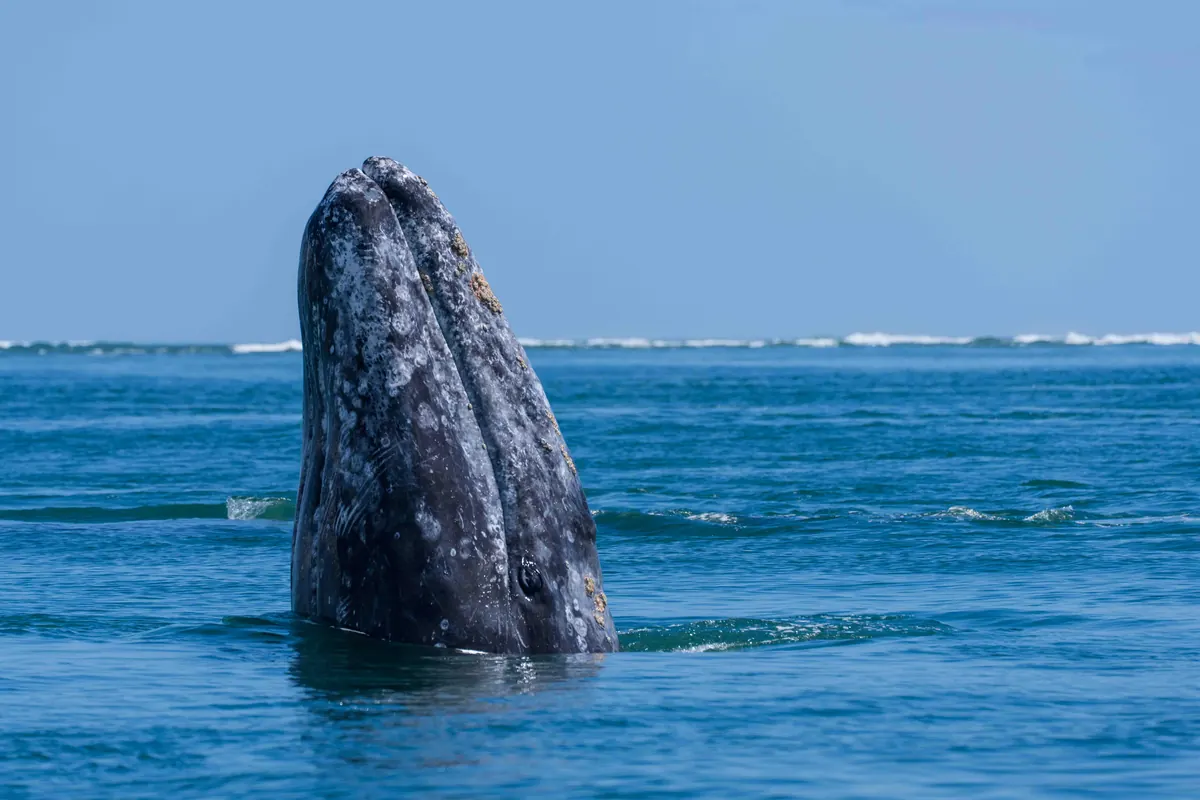
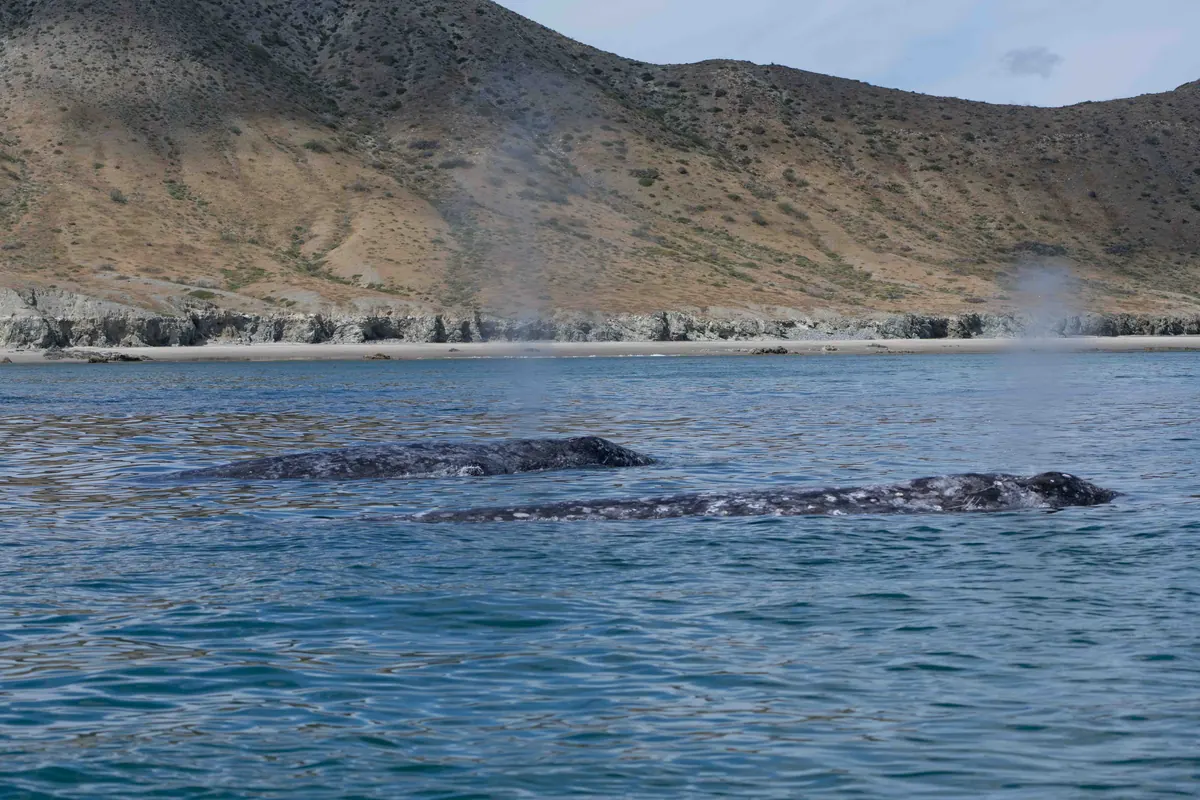
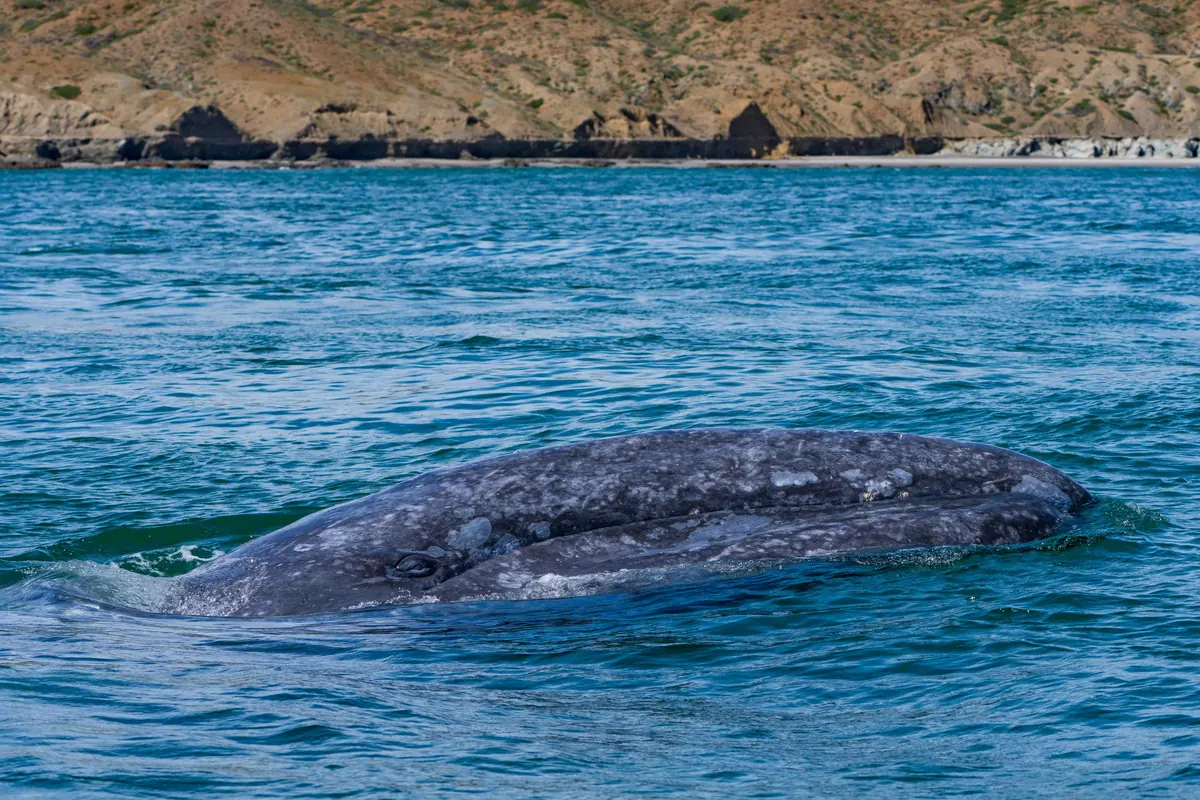
In the San Ignacio and Ojo de Liebre lagoons, gray whales come to give birth and raise their calves between December and April, with a unique behaviour: they approach the pangas (small boats) of their own accord. In the Sea of Cortez (Loreto, La Paz), blue whales gather in February–March, alongside fin whales and Bryde's whales, which can be seen all year.
Watching ethics
San Ignacio and Ojo de Liebre are among the only lagoons in the world where gray whales approach boats voluntarily. They are never chased and contact is never forced. Both lie within the El Vizcaíno Biosphere Reserve, and an official standard (NOM-131-SEMARNAT-2010) limits the number of permits and of boats on the water at once; in the Sea of Cortez, choose operators holding a CONANP permit for blue whale watching.
Practical tips
- Book ahead in high season (February–March): both the lagoons and Loreto have places capped by regulation.
- In San Ignacio and Ojo de Liebre, let the whale come to you. Never touch it first or force contact.
- Combine the Pacific lagoons (gray whales) with the Sea of Cortez (blue, fin and Bryde's whales) if your trip allows for more than one base.
- Bring warm layers for trips in open pangas, even when it is sunny.
- A 100-400mm zoom for the Sea of Cortez; in the lagoons the whales often come so close that you won't need a zoom.
Frequently asked questions
When is gray whale season in Baja California?
From December to April, when gray whales come to the San Ignacio and Ojo de Liebre lagoons to give birth and raise their calves. February is the best month.
Where and when can you see blue whales in Baja California Sur?
In the Sea of Cortez (Loreto, La Paz), where they gather in February and March along with fin whales. Bryde's whales can be seen there all year.
Is it true that gray whales approach the boats?
Yes. San Ignacio and Ojo de Liebre are among the only lagoons in the world where gray whales approach small boats (pangas) of their own accord. The rule is to let the whale come to you: never chase it or touch it first.
Do I need to book in advance?
Yes, especially in February and March: both the lagoons and Loreto have boat quotas limited by Mexican regulation (NOM-131-SEMARNAT-2010).
Can you combine gray and blue whales on one trip?
Yes, if your trip allows more than one base: the Pacific lagoons for gray whales and the Sea of Cortez for blue, fin and Bryde's whales.
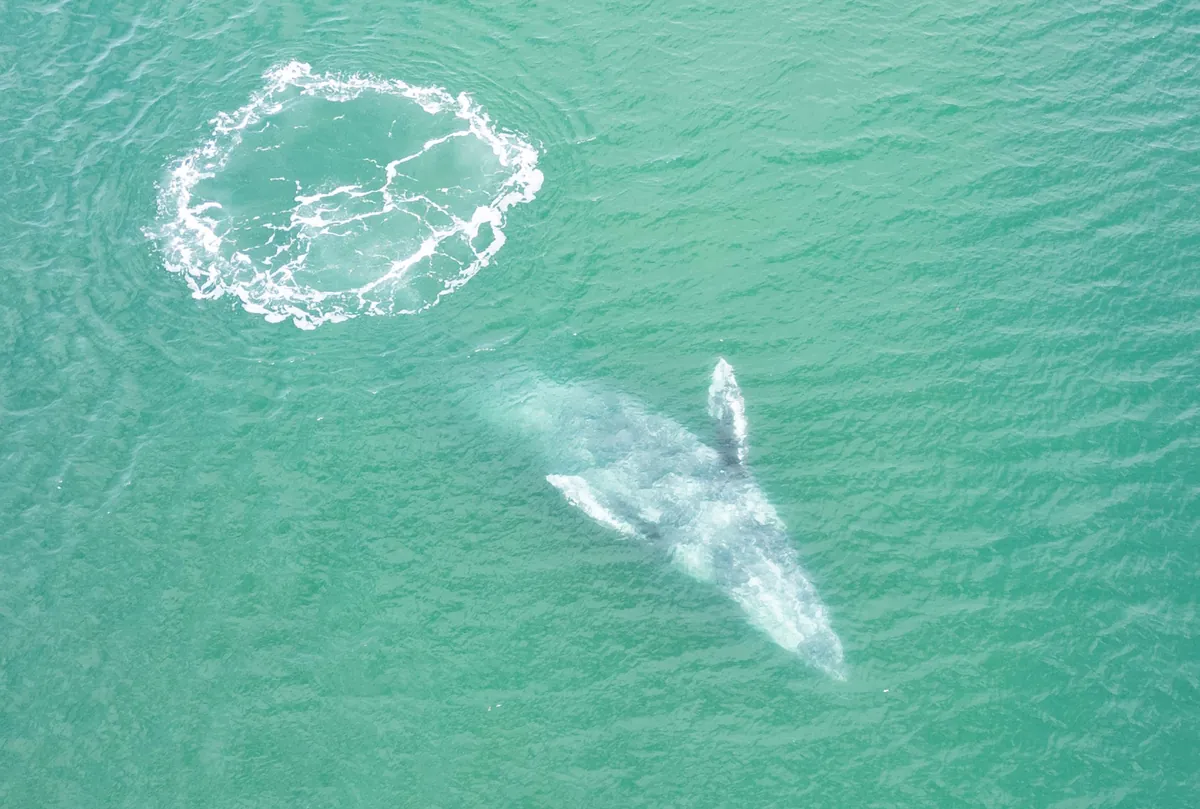
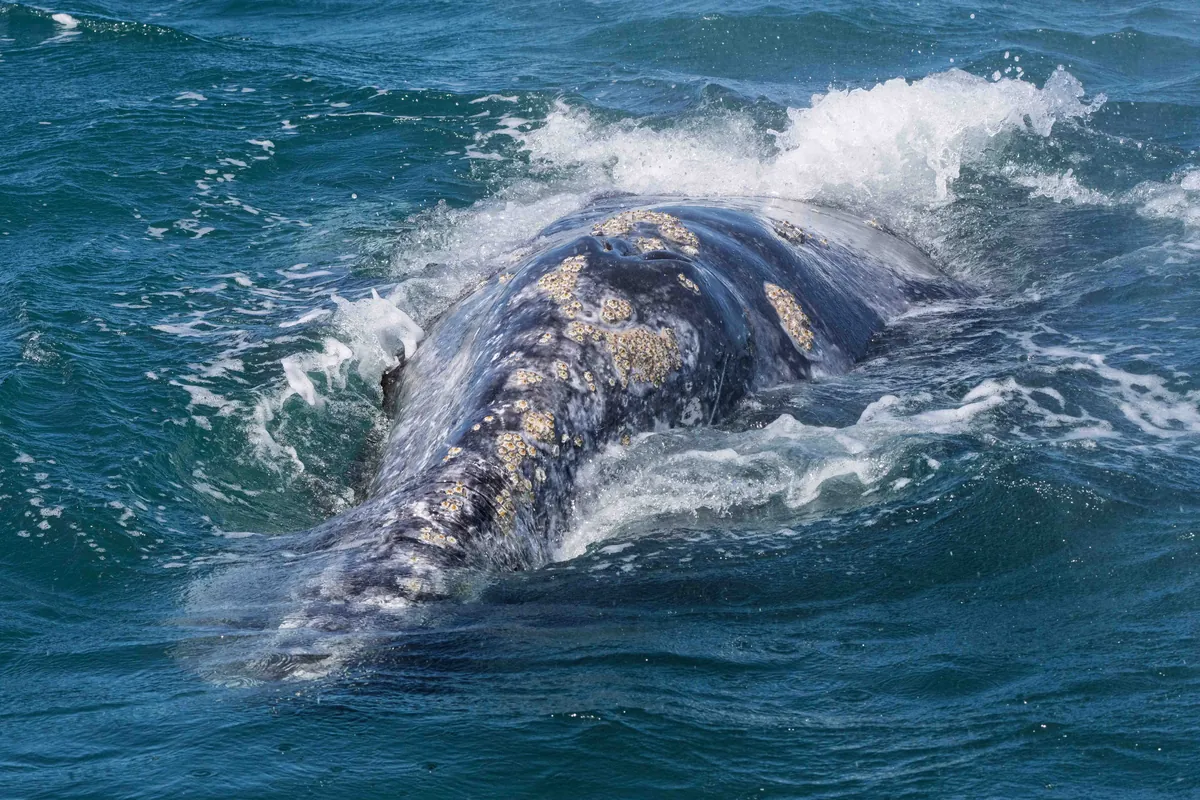
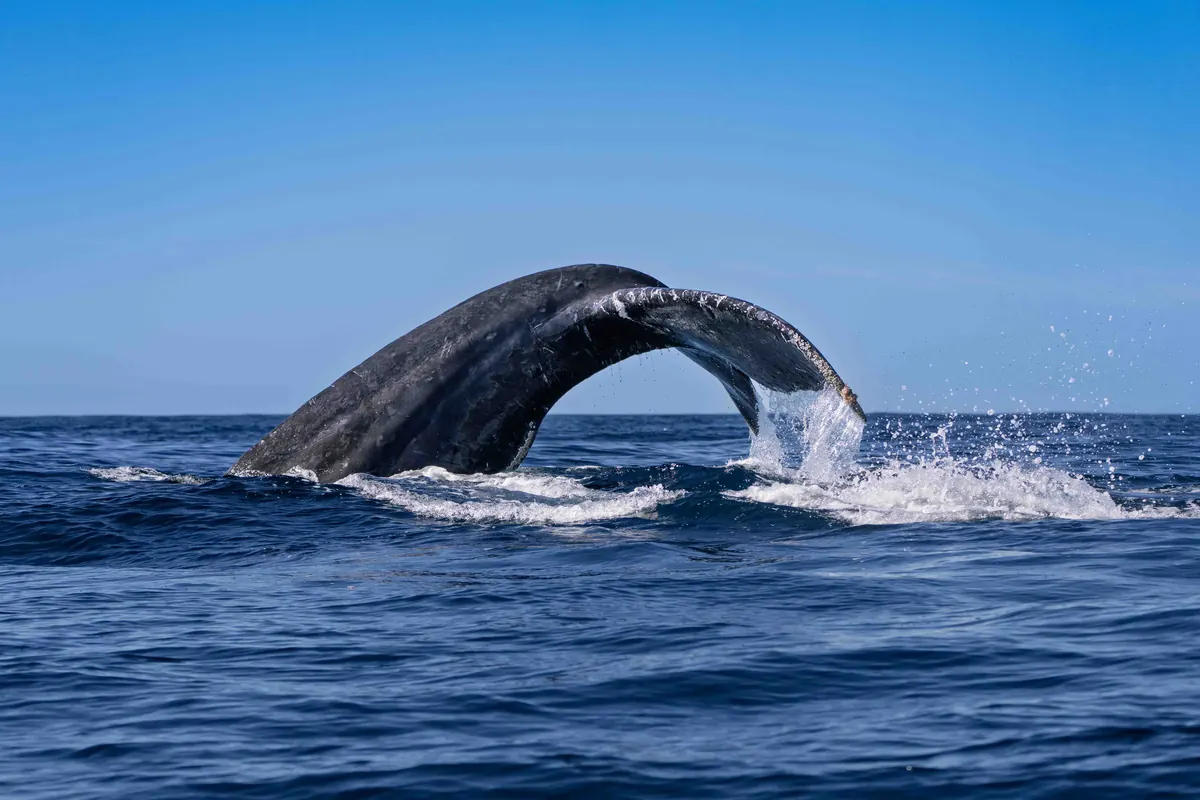
Field photography
Baja California, through our lens.
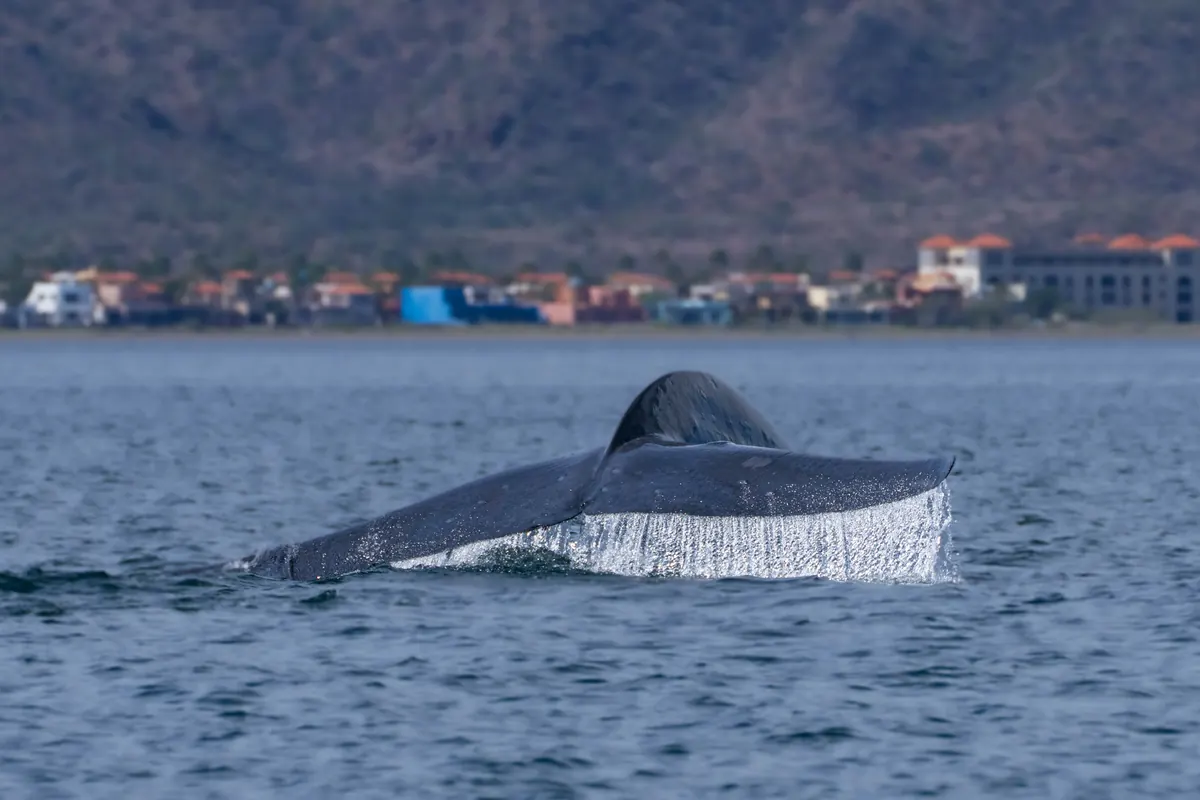
Photographs by José A. Curto, Blowline's co-founder, taken at this destination.

Subscriber information
Everything you need to plan the perfect outing.
- Month-by-month sighting probability, with notes on each period
- Recommended departure points and which traveler profile fits each one
- Verified operators, with information on each one
- Combinable activities in the area
- Full guide downloadable as a PDF, ready to take on your phone
Would you like to see whales in Baja California?
Tell us when and how you'd like to go, and we'll put you in touch with the operators and agencies we recommend.